South Australia and Tasmania
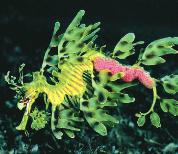
A long-standing desire to photograph sea dragons placed
southern Australia on my cold-water list. Twice I visited
Kangaroo Island in South Australia, mainly for leafy and weedy
sea dragons. But on my third visit I concentrated on the jetty at
Edithburgh, also in South Australia. The diversity of life under this
one small jetty was nothing short of amazing. I came away after
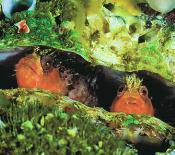
10 days with photographs of five different species of frogfish, blue-
ringed octopus with eggs, pajama squid, giant cuttlefish, ornate
boxfish, short-headed sea horses and other photogenic species.
After Edithburgh I headed for the Tasman Peninsula in
southeastern Tasmania. Giant kelp can be found at several of the
dive sites here and make an excellent backdrop against which
to photograph weedy sea dragons and potbelly sea horses. Most
handfishes (small, bottom-dwelling anglerfish) are endemic
to Tasmania, and on one trip I was able to take the first-ever
photographs of a pair of red handfish guarding their eggs.
Japan: the Izu Peninsula
Japan’s temperate waters offer fascinating photo
opportunities, and the diving at Izu was like no other
place I have seen. The water is too cold for reef-building
corals, but large soft coral and gorgonian coral colonies are
common. There is a unique mixture of tropical fish families
such as lionfish, cardinalfish and morays as well as cold-
water species such as the endearing dwarf lumpfish known
as dango-uo (literally “dumpling fish” in Japanese). Other
particularly photogenic subjects include dragon morays,
pinecone fish, frogfish and two endemic sea horses.
Closer to home
Many divers living in temperate countries have learned
to dive in nearby cold water, and many continue to do so
because it is convenient, inexpensive and efficient. If you live
on or near the East Coast of the United States, there is good
diving in many places, including northern New England, New
Jersey and North Carolina. The Midwest offers interesting
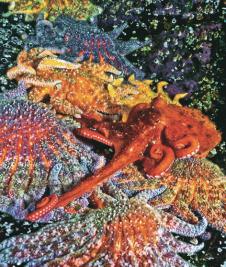
aquatic life in many freshwater lakes and ponds. The West
Coast, from California to Alaska, is home to some of the most
enthusiastic cold-water divers I’ve met; it’s no surprise with
the abundant marine life ready to amaze and entertain.
Tips for good photos and safe dives
Cold-water photography does require a special set of
skills, many of which relate to thermal considerations and
equipment skills that apply to any dive you do, especially in
colder climates.
• Acquire a good drysuit, and become comfortable with
its use. Bring enough thermal underwear to stay warm
along with a patch kit and replacement latex seals for
emergency repairs in the field.
102
|
FALL 2011
IMAGING
//
P H O T O T E C H N I Q U E S
100-103_Photo_Techniques_Fall2011.indd 102
9/29/11