• Accessorize the suit to meet your needs. Pay special
attention to things like hand warmth, bladder-related
options and weight systems.
• Always carry at least one sharp dive knife or strong pair of
scissors where you can reach it quickly. It is all too easy to
become entangled in kelp while concentrating on photography;
if you are low on air when this happens the result can be deadly.
• Do some basic research to become familiar with the
appearance, habitat and behavior of the cold-water marine
life you hope to photograph. Call ahead to learn the
optimal times to visit various destinations; seasons can
affect visibility and other conditions.
• Bring your wide-angle lenses, including a fisheye lens. This
may seem counterintuitive for destinations known for
excellent macro photography, but the comparatively large
size of much of the invertebrate life in cold water creates
opportunities for wide-angle photography that doesn’t
exist with similar (but smaller) tropical species. In addition,
the limited visibility in cold water often requires a closer
approach to large subjects or scenes, which in turn requires
a wider lens than might be required in clear water.
• Carry a good flashlight or modeling light, especially when
doing macro photography, to aid in finding and focusing
on small subjects in dim light. I prefer relatively small,
rechargeable lights with a variable output and a wide
beam, such as the Fisheye FIX LED and Light & Motion
Sola lights. These are also excellent lights for night diving.
• I favor near-neutral buoyancy for my housing/strobe
combination, particularly for close-up work. This facilitates
steadying, focusing and firing the camera with just one
hand when holding on in surge or current and prevents
wrist fatigue while waiting for a subject to cooperate. I
use supplementary flotation in the form of a pair of high-
density, noncompressible foam floats, one on either side
of the housing, positioned in line with its center of gravity.
This creates a package within 3 to 4 ounces of neutral that
will remain stable regardless of the housing’s position.
• Cold water generally contains many suspended particles,
so it is especially important to limit backscatter. Get
as close as possible to your subject, and position your
strobes well off-camera, typically 45 degrees or more, to
avoid lighting particles in the water column between lens
and subject.
• Your strobes will be absolutely necessary to highlight the
almost unimaginably rich colors of cold-water ecosystems
and combat the low levels of ambient light. Slower shutter
speeds and higher ISO settings can help open up the dark
water backgrounds.
Most important, be honest and realistic when you assess
your readiness for cold-water diving. Diving in 50°F water in
a drysuit may require the use of more weight, the ability to
deal with strong currents, dim light, poor visibility, surge and
the loss of sensation and dexterity caused by the use of thick
neoprene mitts. It typically requires a higher level of physical
conditioning, training and experience than warm-water
destinations.
But the payoff comes in the form of images of spectacular
new subjects as well as the opportunity to surface in the
shadow of an ancient Shinto temple or a majestic fiord with
eagles circling overhead. For jaded warm-water divers who
think they’ve seen it all, there’s another whole world to be
discovered and explored.
AD
www.alertdiver.com
|
103
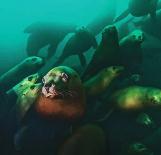
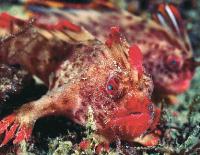
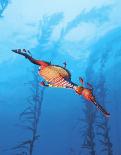
From opposite left: mosshead warbonnets, British Columbia; migrating sockeye salmon, British Columbia; male leafy sea dragon
with eggs, South Australia; red handfish pair, Tasmania; weedy sea dragon, Tasmania; Steller sea lions, British Columbia
Opposite, bottom: A young giant Pacific octopus with sunflower stars, British Columbia
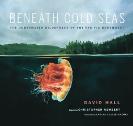
Enjoy more of David
Hall’s stunning cold-
water photography
in his new book,
Beneath Cold Seas:
The Underwater
Wilderness of the
Pacific Northwest.
For more information,
visit www.beneath-
coldseas.com.
100-103_Photo_Techniques_Fall2011.indd 103
9/29/11