
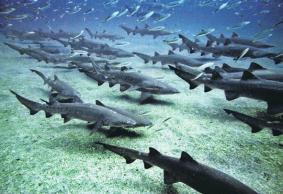
Since that adventure almost 30 years and 2,500 regional
wreck dives ago, I have swum alongside hundreds of sharks
on a single dive in the waters off North Carolina, a coastline
recognized as one of the best locations in the world to dive
a seemingly endless variety of shipwrecks in the company of
large marine animals. There are wrecks for every experience
level from novice to advanced technical diving.
The “Ocean River”
North Carolina boasts 301 miles of coastline, more than any
state on the East Coast except Florida. The southern two-
thirds of its beaches are bathed in the warm waters of the
Gulf Stream. This “ocean river” swerves into the Carolina
coast during the spring and summer months, bringing
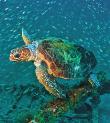
tropical fauna and flora into the shallows and flooding the
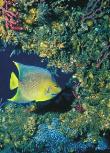
wrecks and reefs with vivid color and abundant marine life.
Divers are often astonished by 100 feet or more of visibility,
water clarity usually expected only in tropical waters.
As the Gulf Stream approaches Cape Hatteras on the
Outer Banks, a lengthy expanse of barrier islands off the
Carolina coast, it barrels into the cold Labrador Current
flowing from the north. The colliding currents head off
into the North Atlantic trailing swirling eddies of water
treacherous to both ships and divers. Throw into this mix
several wars, countless hurricanes, crowded shipping lanes,
the vagaries of marine weather and a gradually sloping
coastline, and you have a wreck diver’s paradise.
Diving into history
Joining the USS Tarpon in the submarine dive portfolio
are three German U-boats sunk during WWII: the popular
U-352
sub out of Morehead City is accessible to many
divers with its resting depth of 115 feet. In the vicinity of the
Outer Banks, the
U-85
rests off the shore of Nags Head at a
depth of 90 feet, while the largely intact
U-701
lies 115 feet
deep, mired in the ever-undulating shoals off Cape Hatteras.
Only recently discovered, the U-701 can be difficult to
reach because of its location in the shoals and the sand that
sometimes completely obscures the wreck. But on lucky days,
intrepid divers can explore an almost totally intact U-boat
with its 88mm deck gun aiming off into the blue.
Each has a unique place in the history of naval warfare, and
their lore and lure have captivated thousands of adventure
seekers during the past several decades. No one knows exactly
how many shipwrecks grace the seafloor off the coast of
North Carolina; estimates reach as high as 2,000, but more
than a hundred of them are well-known and readily accessible
to recreational divers.
Something for everyone
Diving the colder waters off the northern third of the coast
generally requires a full wetsuit and hood, but those willing
to brave the cooler temperatures are treated to a veritable
smorgasbord of options. The WWII Liberty cargo ships
Zane Grey
and
Dionysus
were sunk in only 65 feet of water
just outside of Oregon Inlet as part of the artificial reef
program. A bit north of the U-85 are the tankers
Byron
D. Benson
and
Norvana (York)
, both sunk by U-boats
in 1942 and both resting at 90 to 100 feet. The large bulk
carrier
Marore
, the tanker
Mirlo
* and the
Equipoise
all lie
a bit deeper at depths between 125 and 140 feet and require
specialized training to reach.
www.alertdiver.com
|
29
28-32_Local_Diving_Fall2011.indd 29
10/12/11