82
|
FALL 2011
equipment from the corrosive effect of sea salt may also
result in unwanted risks to divers’ health.
Communal culprits
Most dive operations offer some kind of communal fresh-
water tank for the postdive rinsing of equipment. Generally
there are tanks for rinsing wetsuits, masks, boots, regulators
and buoyancy compensation devices (BCDs) along with
separate tanks for photo equipment. Despite the best of
intentions, such a system may demonstrate more care for
camera equipment than for human health. The volume
of dive gear passing through rinse tanks in a day may
significantly exceed the volume of water in it. Because of the
inequity, rinse tanks become the means for collecting and
concentrating microbes from all users, creating the potential
for spreading infections among them.
In 2007, a research team under Michael Miller of West
Virginia University embarked on a study to sample water
from communal rinse tanks and check it for the presence
of bacteria. The first test was conducted at a popular
Caribbean dive destination. For four days, the team collected
daily water samples from communal rinse tanks after they
were first filled in the morning and again several times
throughout the day. They divided small amounts of the
water samples onto agar plates and subsequently observed
bacterial growth of different morphologies and swimming
patterns. They did not attempt to identify the bacteria
during this phase of the study and, therefore, did not
determine if any were harmful to humans. This preliminary
research simply confirmed the possibility of significant
bacterial presence in rinse tanks.
Several months later, a similar study was undertaken at
a dive facility on another Caribbean island. The operation’s
two boats each had two rinse tanks: one for wetsuits and
BCDs and another for masks and regulators. The operator
fully cooperated with the study; for five days the wetsuit
tanks were drained each morning, and one of them was
cleaned with bleach before they were refilled. The team took
water samples from both tanks at that point and again at
multiple times throughout the day.
Notably, this facility also allowed the sampling of water
from the pipes used to fill the tanks, an opportunity not
previously afforded the team. Tests showed the water
used to fill the tanks was free of bacteria, nor were
bacteria detected in either tank immediately after they
were filled in the morning. However, by the afternoon all
three tanks contained a lot of bacteria of many different
types. Precleaning with bleach did not impact bacterial
contamination. The two mask rinse tanks on the boats were
also sampled, and both of these contained very high levels
of various, unidentified types of bacteria. The time pattern
of the findings indicated the bacteria were rinsed off of the
diving equipment, but it remained unknown whether they
originated from the sea or from divers as well as if they were
pathogenic.
Finding the answer
In June 2008, the team performed a third study with the
aim of identifying bacteria in rinse tanks along with their
source. The study was done at yet another Caribbean dive
resort. Water samples were collected from the hose used to
fill a communal rinse tank, the rinse tank itself, buckets on
the boats in which masks were rinsed and stored, several
dive sites in the ocean at various depths and, finally, ocean
BONUS CONTENT
There’s a flip side to the story:
find out how human and terrestrial
bacteria are affecting our oceans.
Visit www.AlertDiver.com
or scan here.
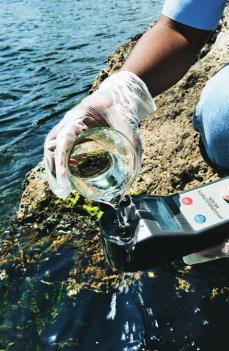
Public health officials measure levels of certain
species of bacteria to evaluate the risks to
humans in many popular recreation areas.
80-85_Bacterial_Hazards_Fall2011.indd 82
10/11/11