Basic HTML Version


18
|
SPRING 2012
DIVE SLATE
//
A
t first, the appearance of Pacific lionfish in the
waters of the Caribbean was met with pleasure by
legions of divers and underwater photographers.
There is an exotic beauty about lionfish; with
their canopy of plume-like dorsal spines they look like ancient
Asian warriors on the march. The excitement diminished
somewhat for me when I knelt on one in the dark. One of its
glorious dorsal spines went through my wetsuit with the ease
of a hypodermic needle. The pain was instant, considerable
and shocking. End of enchantment. Start of more caution,
especially when night diving on their turf.
Delight with the lionfishes’ arrival in the Caribbean soon
turned to dismay. It became apparent these picturesque
beauties multiply with the facility of rodents and are apex
predators in the world of small reef fishes they inhabit. More
ominous still, lionfish have no natural enemies to balance
their destructive appetites. Without some way of checking
their proliferation, marine scientists fear a critical assault on
the balance of the reef food chain.
When lionfish were found in Roatan, Honduras, the first
remedial actions were taken by divemasters who speared and
killed the invaders. Lionfish are docile, nonevasive and easily
shot. I accompanied several tours in which hunters strung the
foes onto their spears like shish kebab, brought the catch back
to the boat and let the guests try the enemy as hors d’oeuvres.
Soon the Roatan Marine Park began issuing divers licenses to
spear the invasive fish. Nonetheless, the population continued
to increase. Only a small percentage of Roatan’s waters are vis-
Reports from the Lionfish Front
A N T ON I O BU S I E L L O
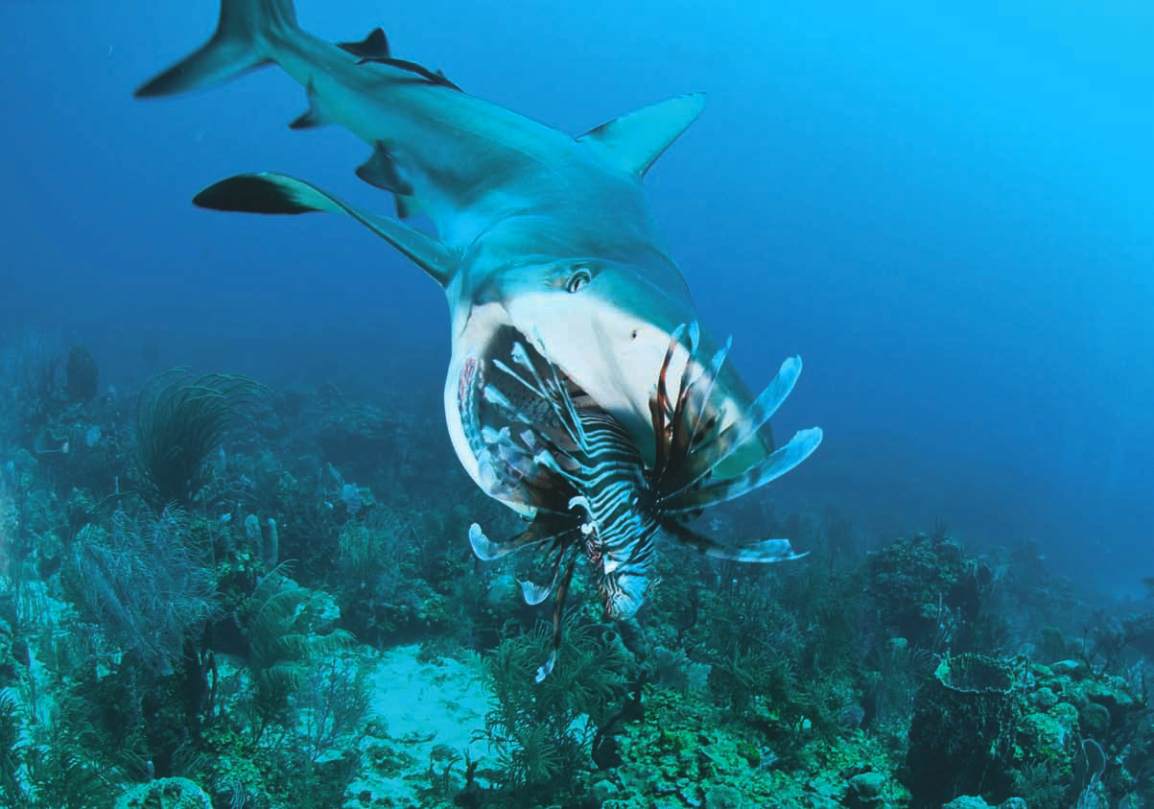
Predators like sharks and
groupers can be taught to prey
on dead or injured lionfish and,
in some areas, eagerly await
handouts from divers.