Basic HTML Version


W
hy freedive when you can scuba dive?”
“Doesn’t it cause brain damage?” “How deep/
long can a person really dive on a single
breath?” “Isn’t it dangerous?” “Those people
are crazy!” These were some of my first thoughts in January
2000, when my coach (and now husband), Kirk Krack, first
started telling me about the sport of freediving. But my next
two thoughts were, “Can I do this?” and “Yes, I think I can.”
I was an instructor trainer in recreational scuba and was
taking technical courses because I wanted to go deeper, stay
longer and learn more. Kirk was an old friend and had just
finished training a guy from New Mexico to dive to 262 feet,
a new world record in the sport.
Why freedive?
How can you reach 262 feet on a single breath? I was captivated
and ready to hear more. I wanted to see if I could do dives that
deep, but I wasn’t convinced to ditch my tanks just yet. I still
wasn’t completely sure why anyone would want to freedive. I
loved my tanks, and since my air consumption was very good I
didn’t think I would need freediving to add to my underwater
explorations. But I began to realize freediving could offer me
freedom, a new challenge and increased comfort in the water.
After receiving some initial training I found I could do on a
single breath everything I once did with scuba. True, a single
breath-hold dive is shorter than a scuba dive, but a freediving
session allowed me to be in the water for several hours, and
Freediving
Finding new freedom in and out of the water
B y M a n d y - R a e K R a c K
38
|
SPRInG 2012
RESEARCH, EDUCATION & MEDICINE
//
A D V A N C E D D I V I N G
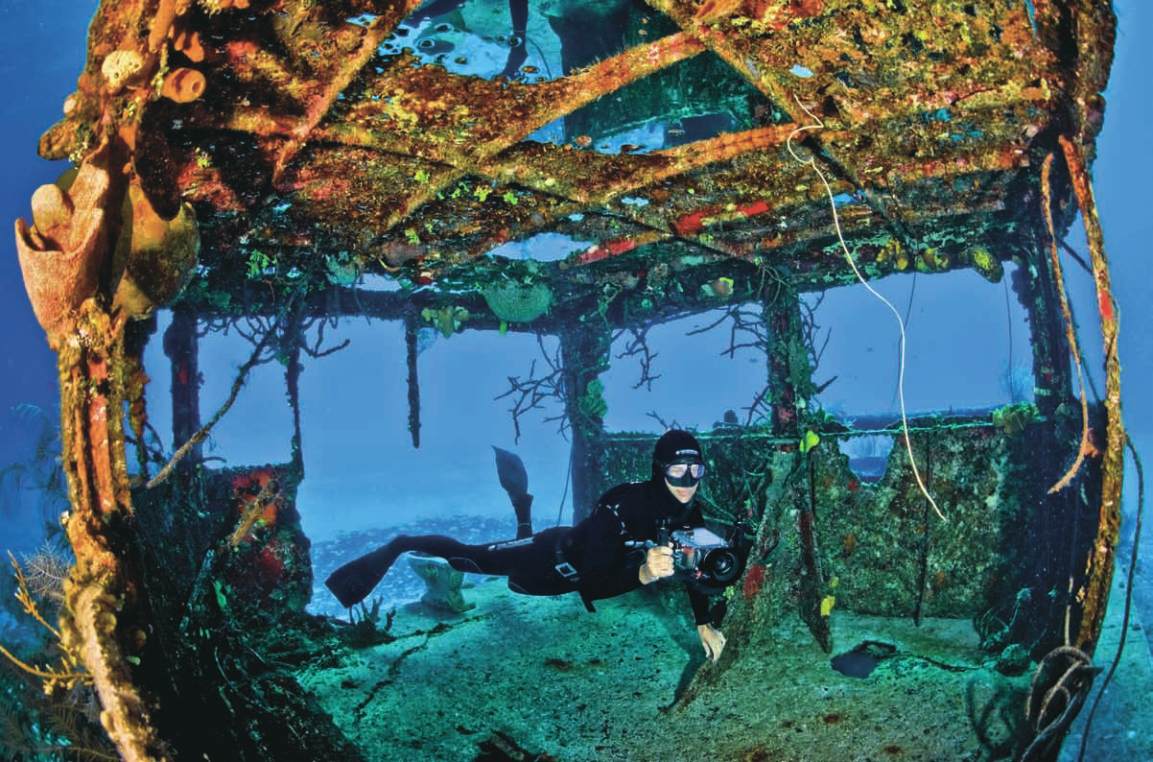
Although a single breath-hold dive is shorter than a scuba dive, a freediving session can
last several hours, allowing extensive exploration of a site.
Opposite: freedivers rely heavily on the buddy system for training and, of course, safety.
COUrTNey PLATT