Basic HTML Version


Prioritizing gas suPPly
On another occasion, two friends and I were diving the
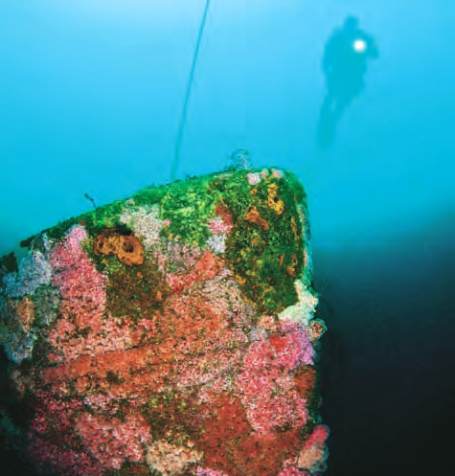
HMCS Yukon off San Diego, Calif. We were practicing a
few skills around the stern of the ship in about 80 feet of
water. We stuck to our dive plan, and all had gone well to
that point. My buddies were using larger cylinders than me,
so I was the first to reach 1,000 psi, the pressure at which
we had agreed to surface. There was a problem, however; I
had finished my drills, but the others had not and still had
equipment deployed. They would not be ready to ascend
for several more minutes. I was tempted to stay down a
little longer to help them, but the obvious danger was I
would be reducing my gas supply and getting in a position
where I would need to conduct a much faster ascent than
the one I had planned. My training kicked in, and the
answer was simply “no.”
I checked with each of the other divers to ensure his
safety and signaled that I was at 1,000 psi. I began my ascent
along the buoy line to 45 feet for a deep stop I had planned;
visibility was good so I could see them while I waited. They
both reached me as I finished my deep stop, and we all
exchanged OK signals before I continued my ascent to my
safety stop. Ten minutes later everyone boarded the dive
boat having accomplished a safe dive.
The familiarity with my buddies’ skills and habits allowed
the dive to proceed as it did. We stuck to our plan, but we’ve
since improved our planning as we now try to incorporate
more “what ifs” (What if I hit 1,000 psi and you still have
gear deployed?) into our thought process.
Calling the dive
On another dive at San Diego’s Wreck Alley, this one on
the Ruby E, my buddy was a relatively new diver who had
recently gotten his advanced open-water certification but
had mostly dived in tropical waters at resorts. The Pacific
Ocean was 61°F that morning, and visibility barely 5 feet. My
buddy and I and two other divers descended onto the wreck,
hoping for enough visibility to allow us to see something.
The other two divers began exploring the wreck and
disappeared into the darkness. I wanted to make sure my
buddy was all right before we let go of the buoy line. When
we made eye contact, I knew he wasn’t. I signaled OK, but
he shook his head vigorously; he was very nervous, but I
could see he didn’t want to be the one to call the dive. I
pointed at him and then made the surface sign; he nodded.
I held his arm, and we made a controlled ascent along the
buoy line, making each of our stops. We reached the boat
safely without incident.
While there are no spectacular stories here, the fact
remains that safe, successful diving is the result of
good decisions. Our most important skills in action are
the ones we employ every day. DAN continues to be
quietly there with education and medical information
to reinforce my dive training and inform me of new
developments in the diving world. I hope my diving
career will be uneventful and DAN’s assistance to me will
continue to be the expert advice I have come to expect. I
also hope that no matter how much experience I have, I
never stop learning and improving.
AD
www.alertdiver.com
|
49
the most important skills are often the ones divers use to avoid trouble.
a skilled diver is adaptable, knowing what to do when low visibility, quicker-
than-expected air consumption or other unforeseen challenges arise.