Basic HTML Version


sudden angina of effort (pain with stress or exercise due
to insufficient oxygenation of the heart muscle) during
diving, especially if the diver has other risk factors for
cardiac disease. This risk may be reduced through early
identification by having a cardiac stress test and (one more
time!) by stopping smoking.
With regard to decompression illness, a 2004 study revealed
heavy smokers tended to develop more severe symptoms of
DCI than lighter smokers, who in turn developed more severe
symptoms than nonsmokers. When heavy smokers were
compared to nonsmokers, the heavy smokers who manifested
DCI were almost twice as likely to have severe symptoms
as mild symptoms. The study did not prove that smoking
predisposed divers to DCI, but it showed that if a diver
develops DCI the severity tends to be greater in smokers.
Q:
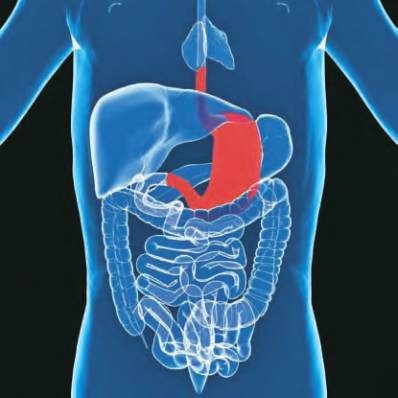
Why do I get GERD
symptoms when I
dive and not any
other time?
A:
Gastroesophageal
reflux disease (GERD)
is a condition in which
stomach contents (food or
liquid) leak backward from the
stomach into the esophagus,
the tube that connects the
mouth to the stomach. This
can irritate the esophagus and
result in burning sensations,
chest discomfort, bad
breath and cough. GERD
affects approximately 30
million Americans and is a significant source of physical
discomfort.
Once food enters the stomach, a ring of muscle
fibers prevents it from moving back into the esophagus.
These fibers are known as the cardiac sphincter and,
when functioning properly, form a one-way valve. If this
sphincter doesn’t close well, food, liquid and stomach acid
can leak back into the esophagus. Reflux can be sufficiently
severe to even damage the esophagus. Heartburn and
gastroesophageal reflux symptoms can be brought on or
made worse by pregnancy, obesity, overeating and certain
medical conditions as well as ingestion of coffee, citrus,
chocolate, tomato products and some medications (aspirin
and ibuprofen are two common examples).
Divers may experience symptoms of GERD as a
result of a tight-fitting weight belt, BCD or wetsuit.
Furthermore, unusual positions in which divers may
find themselves, especially head-down positions, may
exacerbate the symptoms.
Many people experience occasional mild heartburn, but if
reflux occurs while diving a diver could be at significant risk
of injury due to regurgitation or vomiting. Aspirating food or
acid into the lungs or regulator could result in a dive accident.
If you experience regular or serious reflux symptoms, be
sure to seek medical advice before diving. If you experience
symptoms of GERD after diving, check with your primary care
physician to rule out more serious issues before diving again.
— Lucie Gijzen, M.D., and Sam Gerson, M.D.
Q:
If I’m having an emergency, can I email DAN
instead of calling the hotline?
A:
The DAN Medical
Information department
receives more than
3,500 email inquiries every year.
In 2011 we responded to the
largest volume of emails in our
history, and though it is early, at
our current rate we will exceed
that number in 2012. Keep your
questions coming!
The majority of the emails we
receive relate to questions about
medical fitness to dive. On rare
occasions, we receive emergency
emails — emails in which the
writer is seeking an immediate
response or is reporting postdive
symptoms. While it is our intention to provide a prompt
response to all emails, it may take a day or more, so if quick
action is required, email is not a good way to go. If you need
immediate help, the best way to contact us is by calling
the DAN Emergency Hotline (+1-919-684-9111), which is
staffed 24 hours a day, 365 days a year. The DAN Medical
Information Line (+1-919-684-2948) is available during
business hours for your nonemergency medical questions.
If symptoms develop following a dive, seek immediate
medical attention or call 911 (or the local number for
emergency medical services), and then call DAN. If your
treating physician has questions about diving medicine or
the possible association between your symptoms and recent
diving, DAN is here as a resource. Thank you for your calls
and emails — we appreciate the opportunity to address
your concerns and enhance dive safety.
AD
54
|
SPRING 2012
RESEARCH, EDUCATION & MEDICINE
//
F R O M T H E M E D I C A L L I N E
I S T OC K P HO T O . COM