Basic HTML Version




has now been prohibited, and a successful rebound of the
grouper population is the spectacular result.
GREAT WALL EAST AND WEST
Like most of Bloody Bay, the wall here starts at about 25 feet
and drops precipitously to thousands of feet deep. This sheer
drop may induce vertigo in some, but the more common
emotion is rapture, particularly when viewing the elaborate coral
and sponge life typical along this wall. Large orange elephant
ear sponges are common here, as are tube sponges, bushy black
corals and wire corals. The reef crest is shallow enough to be
a great place for offgassing near the end of a dive. Numerous
cleaning stations permit divers close access to normally reticent
fish such as tiger groupers. Squirrelfish are found all across the
reef, and angelfish roam in search of a sponge to nibble. Small
squadrons of Caribbean reef squid are sometimes seen in the
shallow water above the reef, and schools of horse-eye jacks or
barracuda will often congregate beneath the boat.
Cayman Brac and Little Cayman have so many dive sites
it is impossible to cover them all in a single article or even
in just one week of diving. Without a doubt, the best way
to find out what the Sister Islands have to offer is to head
down, dive in and see for yourself what it’s like where the
fringing reefs meet the wild, blue depths.
AD
www.alertdiver.com
|
67
Caribbean
Sea
Cayman Brac
Little Cayman
M.V. Captain
Keith Tibbetts
Anchor
Wall
Greenhouse
Reef
Plymouth
Rock
Airport
Wall
Snapper
Reef
East Chute
and the wreck of
the Cayman Mariner
Wilderness
Wall
Elkhorn
Forest
Eden
Wall
Magic
Roundabout
Eagle Ray
Roundup
Bus
Stop
Mixing
Bowl
Randy’s
Gazebo
Great Wall
East and West
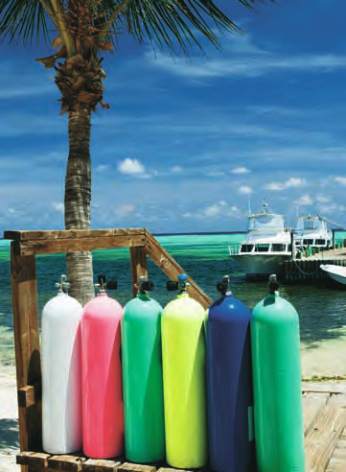
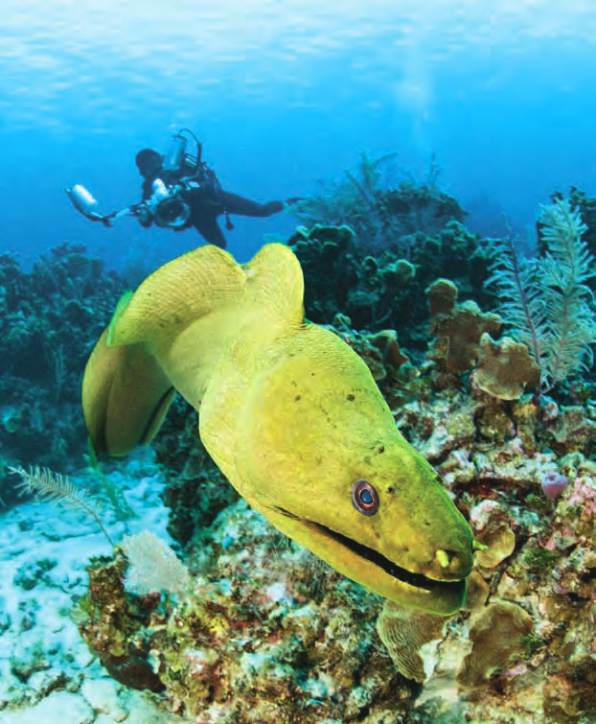
Clockwise from top left: green morays; Little Cayman
is a diver’s island; the guns of the Tibbetts wreck;
Nassau grouper are common along Bloody Bay dive
sites, a testament to enlightened conservation.