This is a SEO version of AlertDiver_Summer2011_web. Click here to view full version
« Previous Page Table of Contents Next Page »DIVE SLATE //
14 | Summer 2011
With wild-caught seafood falling short of the growing global demand, seafood farming is on the rise. Last year, for the first time, more than half of all consumed seafood was raised in farms. Unfortunately, not all farming gives the ocean a break; by farming top carnivores like salmon and tuna, additional pressure is put on our oceans as wild fish are caught to feed farmed fish. On top of that, pollution, disease and other concerns associated with intensive farming in open-water environments are an increasing threat around the world. It’s not too late to turn the tide. There’s something all of us can do — and it’s easy (especially if you like to eat seafood). By making conscious individual choices when ordering seafood, a huge collective difference can be made. Education about what is sustainable and what is not is key to knowing what choices to make, and there are several resources available to provide ready access to the information. One of the leaders in the fight for sustainable seafood, the Monterey Bay Aquarium, has
been putting the “Best Choices” guide in people’s wallets since
1999. The Seafood Watch pocket guides are tailored to each region of the United States to provide information about locally available choices, and there is a national sushi guide with the English and Japanese names of popular types of sushi. Recommendations are also available via a free Seafood Watch app for the iPhone and Android. The app is a great resource for travelers, as it automatically pinpoints your current location and serves up seafood choices for the region you’re in. The app includes “Project FishMap,” a feature

where users across the country can help identify where they’re finding sustainable seafood choices and tagging those restaurants or markets for others to see. The sharing of information allows others who want to make good choices find these locations when they’re shopping for ocean-friendly seafood.
Asking questions of fishmongers or restaurant wait staff can identify seafood fished or farmed in environmentally responsible ways. By selecting these items, consumers
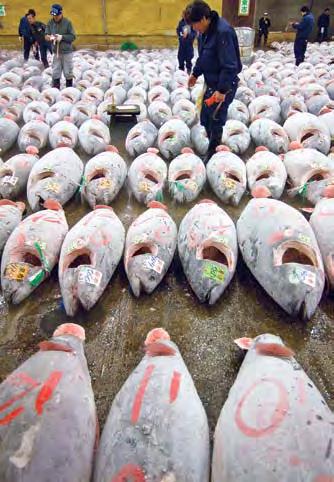
The decline in fish stocks is unsurprising
in light of scenes like this one.
This is a SEO version of AlertDiver_Summer2011_web. Click here to view full version
« Previous Page Table of Contents Next Page »