This is a SEO version of AlertDiver_Summer2011_web. Click here to view full version
« Previous Page Table of Contents Next Page »he Visayas: Bait Balls, Muck and More
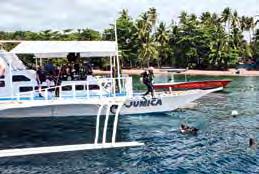
We have come to the central Philippines not really knowing what to expect. Our liveaboard originates in Dumaguete on Negros Island , but we have decided to fly directly to an adjacent island, Cebu, for a few days of land-based diving before we meet the boat. That decision was easy, but figuring where to stay on Cebu was the hard part. Malapascua, renowned for thresher sharks, was one attractive option. We knew we wanted a mix of boat dives and shore dives, small creatures and big reefscapes, so after a little guidebook research we decided that Moalboal, on Cebu’s southwestern coast, fit the bill.
It was a good call; we spent most mornings diving Pescador Island , where we encountered the sardine run. Although we weren’t fortunate enough to view any thresher-shark action underwater, we were treated to massive schools
of sardines blocking the sun over huge barrel sponges and sea fans dotted with crinoids of every imaginable color. Afternoons were spent on the reefs off Moalboal, searching for turtles and giant frogfish or simply admiring the lush soft corals that jut abruptly from the ocean floor. Night dives were done on our resort’s house reef, an easily accessible wall boasting lots of miniature life, including ornate ghost-pipefish, nudibranchs and a massive variety of shrimp. Days later, we met our liveaboard at Dumaguete. Once settled onboard, we promptly geared up to explore nearby Atlantis Dive Resort’s house reef, a rubbly stretch of hard coral surrounded by the stark, black sand that is characteristic of this part of the island. At first glance the seascape was underwhelming, but seconds later our first hairy frogfish came into view and our perception was transformed. This sighting was quickly followed by a sea horse, a harlequin ghostpipefish, a flamboyant
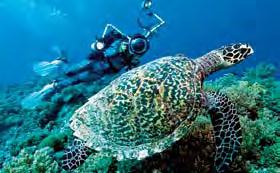
cuttlefish, multiple nudibranchs — you get the idea, and we got the pictures. Dumaguete is the muck-diving capital of the Philippines. Pygmy cuttlefish and juvenile sweetlips are seen everywhere, hovering adjacent to rubble and rocks, and the bottom itself is dotted with cockatoo waspfish, snake eels, Pegasus sea moths, a variety of scorpionfish and stonefish. The dive site
Cars , so named because of the odd wreckage of
a Volkswagen Beetle providing refuge for frogfish and lionfish, became the favorite of our fellow passengers.
When we got tired of diving the muck, there was an easy solution. Nearby (an easy day trip for divers staying in Dumaguete) is Apo Island , and the difference in topography is night and day. Apo is home to untouched hard corals and sea fans as well as scorpionfish, numerous grouper and moray eels, plus lots of small stuff like
68 | SUMMER 2011
T
This is a SEO version of AlertDiver_Summer2011_web. Click here to view full version
« Previous Page Table of Contents Next Page »