This is a SEO version of AlertDiver_Summer2011_web. Click here to view full version
« Previous Page Table of Contents Next Page »A
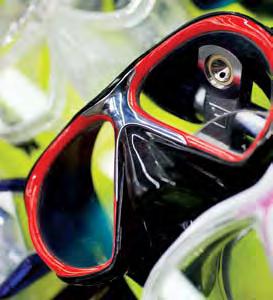
mask is one of the most critical pieces of gear in any dive bag. Without it, the entire point of venturing into the depths is virtually moot. The mask’s basic concept is simple: It provides an air space between the face and the water, allowing the eyes to focus properly for a clear view of the underwater world. While their purpose is simple, masks come in an amazing array of sizes, types, styles and prices, from simple, single-pane masks at less than $100 to pricier full-face masks and those sporting technology that displays dive data. Regardless of a mask’s complexity, when it comes to choosing the right one, it usually comes down to a few basics.
Features
Size/volume — One of the first factors to consider is a mask’s size. Many modern masks strive for a close fit, and that can be a real benefit. A close fit means a small mask volume; the smaller the volume, the less air is required to clear the mask of water. Low volume also means less buoyancy, which translates to better trim and reduced neck strain.
Purge function — Some masks offer a purge function or a one-way flapper valve that allows the diver to clear the mask simply by exhaling into it. While the benefits of the function are easy to see, the downside is the valves sometimes leak.
Nose/pinch pockets — One of the most important features of a dive mask is the nose or, less commonly, the pinch pockets, either of which permits divers to block their noses to allow equalization of the ears. Whether your mask features a nose or pinch pockets, if you dive in cold water make sure you are able to pinch your nose while wearing your gloves or mitts.
Panes —Most masks designed for diving have faceplates and panes made of tempered glass. In addition to the shatter protection tempered glass offers, it is generally scratch resistant and has better anti-fogging characteristics than plastic. Some masks offer only the faceplate, while others have side panes, letting in more light and allowing some peripheral vision. While the greater field of vision has its advantages, multipane masks tend to have larger volumes than single-pane masks.
Skirt material and seal — Most contemporary mask skirts are made of silicone, which is flexible and less prone to ultraviolet light damage than rubber. The silicone is available in a variety of colors, although clear silicone allows the most light to enter the mask, a benefit to divers for whom masks feel confining. The silicone also provides a better seal, as its flexibility conforms to the contours of a diver’s face.
Strap type — All masks should have an adjustable strap to
100 | SUMMER 2011

A Clear Picture
Dive mask basics
t e x t B y R o b e r t N . R o s s i e r p h o t o s b y s t e p h e n f r i n k
m a s k s o n d i s p l a y c o u r t e s y d i v e r s d i r e c t , k e y l a r g o , f l a .
This is a SEO version of AlertDiver_Summer2011_web. Click here to view full version
« Previous Page Table of Contents Next Page »