This is a SEO version of AlertDiver_Summer2011_web. Click here to view full version
« Previous Page Table of Contents Next Page »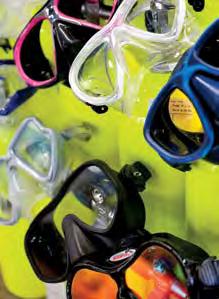

hold the mask in place. A split strap generally secures the mask by pulling it against the face and nose. Many divers prefer the comfort of a broad neoprene strap, which is less likely to tangle in the diver’s hair. No matter the material, make sure the mask strap is adjustable and locks securely in place.
Full-face masks — Full-face masks are great for cold or contaminated water, and they are generally much more compatible with underwater communication systems. While that is undoubtedly beneficial in some situations, full-face masks are certainly more expensive than their partial-face counterparts, and they require additional training and skills to use properly.
Heads-up technology — If price is not a concern, consider one of the new designs that integrates a dive computer and wireless pressure receiver into the mask, providing critical information such as depth, time, air pressure and decompression status in a heads-up display. These masks are great for divers who dive in low-visibility conditions, at night or with both hands occupied.
Corrective lenses — People who wear glasses or contacts may wish to try a custom-made mask with prescription lenses. Many divers who are comfortable in their soft contact lenses simply wear those while diving, but prescription masks can really improve the diving experience for people who wear glasses or hard contacts, which aren’t recommended while diving.
Checking the Fit
The fit of the mask is the most important factor in creating a watertight seal. To check the fit of a mask, hold it to your face and press gently. The mask should form a seal and be free of any gaps or pressure points. Since the shape of our faces changes when we have a regulator or snorkel in our mouths, it is best to perform the fit check with a mouthpiece in place.
Care and Maintenance
Avoid leaving your mask out in the sun, and always store it in a cool, dry location where it is protected from impact with other equipment. A dedicated storage box or bag provides protection and prevents the skirt from becoming deformed during storage and transport. To reduce fogging, clean the faceplate of a new mask inside and out with toothpaste to remove any film left in the manufacturing process. Commercial anti-fog solutions are available, although saliva may work just as well. Spit or dispense the anti-fog solution on the inside of the mask, rub until it squeaks, then rinse with water. After diving, rinse the mask with fresh water, and allow it to dry before storage. Most dive boats separate mask rinse bins from camera rinse bins, since some mask defog agents may damage housing O-rings or ports. AD
www.alertdiver.com | 101
Shooter Masks
While many underwater photographers prefer their models wear clear silicone masks, which allow for better illumination of the models’ eyes, they themselves tend to use black-skirted “shooter masks.” This is because light coming through the sides of a mask via clear silicone or side panes will strike a viewfinder, reducing contrast and making it more difficult to discern fine detail.
I wear reading glasses, so I have another addition to my personal shooter mask. Seeing the small type on my camera’s electronic display and some of the detail on my dive computer can be difficult, particularly in low light, so I have a small diopter (magnifying lens) built into the lower left portion of one of the lenses on my mask.
The anti-fog aspect of mask maintenance cannot be overstated. It’s important to take the time to scrub masks with soft scrub, toothpaste or a commercial scrub. A face mask is the portal to the beauty of the underwater world, and proper preparation and defog are essential for enjoyment and efficiency.
— Stephen Frink
This is a SEO version of AlertDiver_Summer2011_web. Click here to view full version
« Previous Page Table of Contents Next Page »