This is a SEO version of AlertDiver_Summer2011_web. Click here to view full version
« Previous Page Table of Contents Next Page »patient selection is of the utmost importance. Due to limited resources, it may not always be practical to treat every patient with signs and symptoms of decompression sickness (DCS) with definitive therapy such as portable hyperbaric oxygen (PHBO) chambers or in-water recompression (IWR). (Editor’s note: To read more about IWR, see “Expert Opinions,” Alert Diver, Winter 2011.) A three-tiered triage system can be useful in deciding which patients would most benefit from recompression versus conservative management. Tier 1 patients have mild disease, Tier 2 patients have more moderate symptoms, and Tier 3 patients have life-threatening DCI. Patients with mild symptoms, including mild joint pain or rash consistent with “skin bends,” are common. Because of the benign nature of Tier 1 patients, it may be reasonable to manage these cases conservatively by administering 100 percent surface oxygen, intravenous hydration and oral nonsteroidal anti-inflammatory drugs (NSAIDs) such as ibuprofen or ketorolac. More definitive therapy may not be required as the natural progression in these cases is toward improvement, but patients must be carefully monitored for progressive signs or symptoms with serial neurologic exams. Tier 3 patients are those with life-threatening DCI, either severe Type II spinal cord DCS, cardiovascular DCS or arterial gas embolism (AGE) with altered mental status or cardiac arrest. Advanced cardiac life support may be life-saving and would take precedence over hyperbaric therapy. These patients are too sick to go back in the water for a trial of IWR and too sick to be put in a small portable hyperbaric chamber where team members would be unable to intervene without decompressing the chamber.
Tier 2 patients are the best candidates for either IWR or PHBO therapy. Typically, these patients have moderate to severe Type I DCS including significant joint pain and rash. In contrast to Tier 3 patients, Tier 2 patients are generally able to actively participate in their own care: They’re awake, oriented, able to maintain their own airways and spontaneously breathing. Most important, they must be willing and able to either get back into the water with
the appropriate IWR staff and equipment or complete a modified treatment table in a portable chamber.
Regardless of patient selection, treatment of DCS in remote locations with either IWR or PHBO chambers requires significant training, equipment and experience. All patients should receive 100 percent oxygen, intravenous fluids and possibly NSAID therapy. Those who have more significant disease should be considered for recompression therapy. The logistical and financial difficulties associated with both IWR and PHBO can be challenging but are not insurmountable.
What is the state of hyperbaric chamber access for injured divers in the United States today?
Dick Clarke: In the setting of acute-onset decompression accidents, immediate availability of hyperbaric treatment is imperative; it can literally mean the difference between life and death. Immediate chamber access can lead to the resolution of a devastating spinal cord injury that might otherwise leave a diver permanently disabled; it may allow a diver to continue to enjoy the underwater world rather than be medically restricted from further diving. While the preceding statements are generally well appreciated, divers are reminded of them because of a serious threat to the availability of care. In fact, this threat has evolved to the point of crisis. On an increasingly frequent basis, hospitals that have long been available to treat divers regardless of when an accident occurs are severely restricting chamber access or closing their hyperbaric facilities altogether. In the past several months alone two such treatment facilities in Florida advised DAN ® to look elsewhere for emergency care of injured divers. What is driving such an unconscionable loss of emergent access? As paradoxical as it seems, it is occurring during a period of unprecedented growth in the availability of hyperbaric medicine across the United States. The explanation is found in the business model driving this growth. To maximize revenue generation while at the same
38 | SUMMER 2011
RESEARCH, EDUCATION & MEDICINE // E X P E R T O P I N I O N S
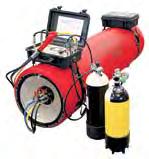
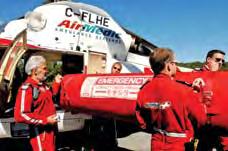
Portable chambers such as the SOS Hyperlite allow emergent treatment and transportation of injured divers in an oxygen-filled, hyper-baric environment.
Opposite: Chamber operators can com-municate with patients or inside tenders while operating multiplace, or class A, chambers.
This is a SEO version of AlertDiver_Summer2011_web. Click here to view full version
« Previous Page Table of Contents Next Page »