This is a SEO version of AlertDiver_Summer2011_web. Click here to view full version
« Previous Page Table of Contents Next Page »RESEARCH, EDUCATION & MEDICINE // H A Z A R D O U S M A R I N E L I F E
S
ome of the most beautiful and seemingly harmless marine invertebrates are among the most hazardous. Snorkelers and divers may unintentionally come into contact with free-swimming jellyfish or touch hydrozoans such as fire coral while exploring reefs or wrecks. Occasionally, people may be stung while handling or stepping on jellyfish that have washed ashore. Although many envenomations are mild, some marine invertebrates produce incredibly potent toxins that can cause serious medical complications and even death.
General Treatment Principles
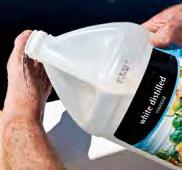
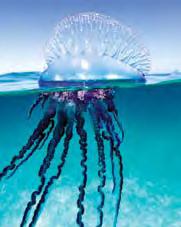
The four main classes considered in this article are (1) hydrozoans, such as Portuguese man-of-war and fire coral; (2) scyphozoans, the true jellyfish; (3) anthozoans, including stony corals, soft corals and anemones; and (4) cubozoans, the box jellyfish, including Chironex fleckeri. Each of these classes is armed with stinging cells generally known as nematocysts. Symptoms of envenomation depend on the species, venom dose and body location. Immediately after a suspected jellyfish or hydroid sting, rinse the affected area with household vinegar (acetic acid 5 percent solution). If vinegar is not available, use seawater or a paste of baking soda. Hot water (to the victim’s and caregiver’s tolerance), heat packs, cold packs or ice may provide some pain relief, but do not place ice or unheated freshwater directly on affected skin. Remove any tentacle fragments, but take care to avoid contact with fingers or hands (wear thick gloves if possible). Rinse again with any remaining vinegar.
Hydrocortisone (0.5 percent to 1 percent) cream or ointment may be applied twice daily to the affected area until signs and symptoms of envenomation disappear. In some cases, a doctor may need to prescribe a stronger steroid regimen. If the area appears infected or the victim develops a fever, discontinue the use of any steroid and seek medical care. Complex or significant envenomations (any producing systemic symptoms such as nausea, vomiting, shortness of breath or confusion) require immediate evaluation by a physician.
After an envenomation it is possible for individuals to develop an allergic reaction, which may be severe. Anaphylaxis is a potentially deadly allergic reaction that can involve respiratory distress, airway
Marine
Envenomations: Jellyfish and Hydroid Stings
B y J o s e p h B e c k e r , M . D . , a n d P a u l A u e r b a c h , M . D . , M . S .
This is a SEO version of AlertDiver_Summer2011_web. Click here to view full version
« Previous Page Table of Contents Next Page »