This is a SEO version of AlertDiver_Summer2011_web. Click here to view full version
« Previous Page Table of Contents Next Page »www.alertdiver.com | 77
Royal Navy dockyards — This includes the Bermuda Maritime Museum and the old Casemate Prison, which just opened to the public. The prison has some of the best views on the island.
Rum swizzle/dark and stormy — There’s a saying about the rum swizzle from the Swizzle Inn: “Swizzle in, swagger out.” Made strong with Bermuda’s Gosling Black Seal Rum, it may be best to call a taxi afterward. Locals prefer a dark and stormy, a concoction of Goslings and ginger beer that tastes best after tea and scones.
Pink sand beaches — Try Elbow Beach, Horseshoe Bay or Coco Reef, each of which offers wide expanses of Bermuda’s famous soft, pink sand.
Forts — For an island in the middle of nowhere, Bermuda was historically quite strategic. There are more than 90 forts on the island; St. Catherine Fort is one of the best.
Thomas Moore’s Jungle — The largest expanse of undeveloped land on Bermuda, the Walsingham Nature Reserve has a rarely visited swimming cave with crystal-clear water and some other caverns that make for exciting exploration.
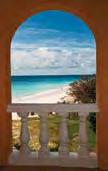
High tea — There’s a saying: “Better to be deprived of food for three days than tea for one.” Every day between 3 and 5 p.m., Bermudans pause for tea, and around the island you’ll find plenty of places with traditional afternoon tea service.
You can’t rent a car on Bermuda, so choose a dive shop close to the wrecks you want to dive, or switch sides of the island midtrip to dive wrecks on both sides (which I’d recommend). I usually start off on the eastern side of the island near St. George, designated as a World Heritage town by the United Nations Educational, Scientific and Cultural Organization (UNESCO). The following wrecks are among the best.
Hermes — Sunk in 1985, this 165-foot ex-buoy tender sits upright on the sand next to a reef. A photographer’s dream, it’s the most popular wreck off Bermuda.
Mary Celestia — Sunk in 1864, this U.S. Civil War blockade-runner is 225 feet long and one of the island’s most visually intriguing wrecks. The intact paddlewheel has been turned into a miniature coral kingdom. The Mary Celestia is now in the news more than ever. Recent storms have uncovered portions of the wreck previously smothered in sand, and the National Oceanic and Atmospheric Administration (NOAA) is partnering with the Custodian of Historic Wrecks and the Government of Bermuda to excavate and recover artifacts, including corked bottles of wine now known to exist on the wreck.
King George — Not many divers can find any mention of the 171-foot King George in their Bermuda logbook. For years it sat unmolested, and even now this 100-foot-deep wreck is dived only by special request — a request that’s definitely worth making.
Montana/Constellation — A two-for-one dive, the 236-foot Montana was wrecked in 1863, and the Constellation, a 192-foot, four-masted schooner, hit the reef in 1943. Both offer interesting coral-encrusted structures, including the Montana’s easily recognizable bow.
Pelinaion — This 385-foot Greek cargo ship split in two over the reef in 1940. The massive boilers (so big you can swim into them) and steam engine are must sees.
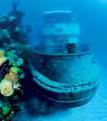
Cristobol Colon — The largest shipwreck in Bermuda, this 499-foot Spanish cruise liner sank in 1936 and now provides luxury accommodations for marine life.
Although you can dive year round, there’s definitely a best season to dive Bermuda for visibility. From December to April, when the water is in the mid-60s°F, the visibility soars to as much as 200 feet. As the water warms to as high as 82°F in the summer, algae blooms, and the visibility drops to 60-80 feet, sometimes less. The best times for visibility and warm water are June, October and November, when water temperatures are in the high 70s and visibility is around 100 feet.
This is a SEO version of AlertDiver_Summer2011_web. Click here to view full version
« Previous Page Table of Contents Next Page »