This is a SEO version of AlertDiver_Summer2011_web. Click here to view full version
« Previous Page Table of Contents Next Page »80 | SUMMER 2011
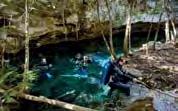
fter hiking through sun-dappled, green-lit jungle in my bathing suit, shorty wetsuit and sandals, I descended a winding stone staircase and a series of rough-hewn wooden ladders to a mossy platform above the clear waters of Cenote Dos Ojos, one of the most popular diving caves of the Mexican Riviera. Gleeful shouts of children jumping into the water and the splashing sounds of enthusiastic snorkelers echoed of the vaulted limestone ceiling as I donned my scuba gear. Peering into the depths of the crystalline water, I saw boulders and sharp stalagmites thrusting up from the bottom of the vast pool and forming the entrance to this mysterious and intriguing aquatic chamber. Nicolas, my guide, turned to me and asked, “Estás lista?” I adjusted my mask, took a deep breath and smiled. “Sí, por supuesto.” It was time to explore the shadowy depths of the cenotes.
Cenotes — natural wells
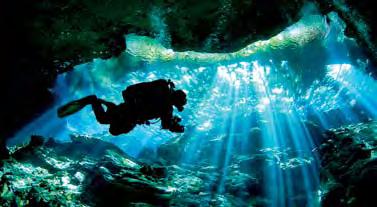
— originated during the mass extinction event that occurred 65 million years ago. An asteroid the size of San Francisco, traveling at almost 18 miles per second, hurtled from deep space, smashing into the Yucatan Peninsula near the Gulf of Mexico. Molten rock, ash and other ejected debris were fung into the upper atmosphere, darkening our entire planet. It is now widely accepted that this collision, either on its own or in concert with other events, led to the demise of the dinosaurs. Luckily, many early mammals — among
them human ancestors — survived the disaster. Te impact caused the thick limestone bedrock of the Yucatán to vaporize and release its stored carbon dioxide, resulting in uniquely fssured, porous rock. Over subsequent millennia a combination of natural phenomena — including rainwater corrosion, water table decline during the ice age and fooding — carved a vast network of subterranean aquatic caves in the stone and later exposed them to the world. Te resulting labyrinth
flled with fresh spring water to become a diver’s playground. Tough break for the dinosaurs but a fortunate happenstance for cave-diving enthusiasts. I had learned about cenotes only recently. When planning my trip to Tulum, a coastal village about two hours south of Cancun, I envisioned morning jogs on white sand beaches and plunges into the foaming aquamarine waves that break for miles along the shore. I anticipated reading by the pool, admiring the daring exploits of kite surfers and diving the coral reefs just
T U L U M ’ S
C E N O T E S
A glimpse into the Maya underworld
B y M o l l y R i d d l e
This is a SEO version of AlertDiver_Summer2011_web. Click here to view full version
« Previous Page Table of Contents Next Page »