This is a SEO version of AlertDiver_Summer2011_web. Click here to view full version
« Previous Page Table of Contents Next Page »www.alertdiver.com | 97
exceed what scientists believed possible. Taken together, the benefits of mining the riches of hydrothermal vents are proving hard to resist.
MINING HYDROTHERMAL VENTS
Te mining, in fact, has already begun. Nautilus Minerals has a major seabed sulfde-mining project under way in the waters of Papua New Guinea. Canada, New Zealand and Australia have also set up mining operations at hydrothermal vent sites of their coasts.
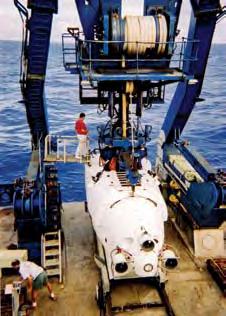
But the most ambitious and expensive deep-sea mining project proposed to date belongs to China. After using remotely operated underwater vehicles (ROVs) to explore vents throughout the world, the Chinese government submitted plans to the International Seabed Authority (ISA) in May 2010 to mine the hydrothermal vents around an underwater ridge in the Indian Ocean near Madagascar. Te selected vents lie at a depth more than 5,000 feet below the surface, and the intended harvest is mineral-rich ore.
ENVIRONMENTAL IMPACTS OF DEEP-SEA MINING
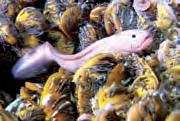
Despite the expected benefits derived from gathering what lies beneath the ocean floor, some environmentalists are concerned about deep-sea mining. At 7,000 feet there is
little margin for error. As we’ve seen before, equipment failure, engineering miscalculations and unforeseen accidents can have devastating consequences. The fear is that without proper monitoring and responsible mining protocols, hydrothermal vents and surrounding ocean ecosystems may be damaged. But because of the vents’ remote locations, it’s hard to say exactly what damage will be done. Some experts predict that removing a sizeable portion of the seafoor could cause a major disturbance. Deep-sea mining may release toxic plumes of sediment from mining machinery, degrading or killing the seabed’s flter-feeding organisms vital to the vent food chain. Such plumes might also block out light at shallower depths, hindering the development of plankton, also vital to the food chain. Deep-sea mining could reopen naturally closed vents and release sulfur and methane compounds toxic to surrounding ecosystems. Some predict the mining could cause suboceanic landslides, while others fear the equipment will produce enough noise and vibration in the foor-to-surface water column to disrupt the lives of marine mammals that live there. As conservationist Charles Clover said, “Te potential for confict between commerce and conservation is huge.” On the other end of the controversy, some of the most ardent proponents of deep-sea mining are the scientists themselves. Some believe that if done responsibly the information and
resources gleaned outweigh potential problems. Many scientists argue that hydrothermal vent ecosystems do not appear to be fragile. For millennia they have withstood enormous natural impacts and are periodically decimated. Yet they rebuild within only a few years, proving great resilience.
THE DEBATE CONTINUES
While advocates and opponents argue the implications of exploration, at this point the greatest obstacle to deep-sea mining is cost, as a single operation can run hundreds of millions of dollars per year. But as land-based mineral ores become increasingly scarce and the quest for new drugs
escalates, there is no doubt the ocean floor will be targeted for mining. Although we can hope, it remains to be seen whether this technological treasure hunt will be undertaken with respect for environmental conservation and sustainability. AD
LEARN MORE:
To learn more about those tasked with creating and monitoring undersea mining protocols, visit www.AlertDiver.com.
This is a SEO version of AlertDiver_Summer2011_web. Click here to view full version
« Previous Page Table of Contents Next Page »