RESEARCH, EDUCATION & MEDICINE
//
H A Z A R D O U S M A R I N E L I F E
M
any fish and other marine life are poisonous
for either part or all of their lives. Toxins
may be produced directly by the animal
or concentrated within certain organs or
tissues as it feeds on other poisonous sea life. It can be tricky
extricating these hazards; cooking or soaking are generally
not reliable methods for destroying or removing toxins from
marine life. Worse, tainted seafood may not have an abnormal
taste, smell or appearance, looking completely normal to the
unsuspecting consumer. Caution is indicated, and a strong
suspicion of poisoning is appropriate in the setting of an
unexpected illness.
While multiple forms of seafood poisoning may occur,
the following is a list of the major poisoning illnesses and
their treatment.
Scombroid
Scombroid poisoning occurs after inadequate preservation
or refrigeration of many different fish species, including
albacore, bluefin and yellowfin tuna as well as mackerel,
wahoo, skipjack, mahi-mahi, sardine, anchovy, bluefish and
bonito. Scombroid poisoning occurs when muscular tissues
decompose in these animals, producing a histaminelike
chemical involved in allergic reactions. Affected fish may have
a metallic, peppery taste, although changes in taste, smell or
appearance may not be noted.
Symptoms usually occur within two hours of ingestion and
resemble those of an acute allergic reaction: itching, flushed
skin, hives, swelling of the face and headache. Severe symptoms
are rare but may include difficulty swallowing or breathing as
well as shock (low blood pressure). Symptoms are usually self-
limiting and may resolve within eight to 12 hours; however,
reactions lasting several days have been described.
Scombroid should be managed medically in a manner similar
to other allergic reactions: Mild reactions may be treated with
diphenhydramine (Benadryl). For severe reactions, medical
attention should be sought immediately.
Tetrodotoxin Poisoning
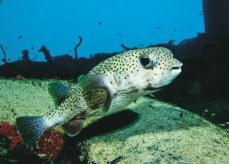
Tetrodotoxin-producing fish include porcupinefish and
pufferfish (toadfish, blowfish, globefish, toado) as well as
sunfish. Several of these species are considered delicacies in
some regions including Japan, where specialized chefs are
licensed in the preparation of these fish known as “fugu.”
While tetrodotoxin may be present throughout the fish’s
body, it is concentrated in the liver, intestine, skin and
reproductive organs. Tetrodotoxin poisoning may occur
rapidly, with symptoms manifesting anywhere from 10 minutes
to four to six hours after ingestion. Symptoms begin with
numbness or tingling around the mouth, which may progress
to generalized weakness and lightheadedness. Vomiting,
diarrhea, abdominal pain and excessive drooling may also
occur. Progressive weakness and even paralysis associated with
difficulty breathing or swallowing may also be present. Victims
of tetrodotoxin poisoning may develop shock, and of those
who do, 60 percent die even with medical support.
Suspicion of tetrodotoxin poisoning requires immediate
medical evaluation. Breathing support may be required, and
paralyzed patients may still be completely awake and aware.
Prevention is key, and it is wise to avoid eating puffers, even
when prepared by an expert chef.
Ciguatera Poisoning
Ciguatera poisoning involves tropical and semitropical coral
reef fish. Larger and older fish are more toxic than others,
and while all tissues of an affected fish can be trouble, the
liver and reproductive organs present the most danger.
The greatest concentration of affected fish hail from the
Caribbean as well as the Indo-Pacific and include groupers,
parrotfishes, surgeonfish, triggerfish, jacks, wrasses and
barracuda, although many other species of reef fish have
been implicated. The odor, appearance and taste of the fish
are not affected by toxins.
The onset of symptoms typically occurs within several
hours of ingestion. They manifest as diarrhea, nausea,
vomiting and abdominal pain. Severe symptoms are rare
but may include seizures and body aches as well as difficulty
56
|
FALL 2011
Marine Life
Poisonings
T E X T B y J o s e p h B e c k e r , M . D . ,
a n d P a u l A u e r b a c h , M . D . , M . S
P H O T O S B Y S T E P H E N F R I N K
56-57_hazardous_marine_Fall2011.indd 56
10/11/11